
Your AI is Getting Brain Rot (And You Won't Be Able to Fix It Later)
Most businesses are unknowingly poisoning their AI systems with low-quality data right now, and by the time they notice the damage, it's already too late to fully reverse. The good news? This is entirely preventable if you know what to look for.
I was sitting with a property developer client last month. Successful bloke, been in the game for 20 years, knows his stuff. He'd spent six months feeding every single document, email, and social media post he could find into his new AI system. Thousands of hours of data. He was proud of it.
"Brett," he said, "I've given it everything. Every newsletter we've ever sent, every tweet, every Facebook post, all our chat logs. It's got more information than any person in my company."
I asked him one question: "Did you check the quality of any of it?"
Silence.
Three weeks later, he was complaining his AI was giving clients incorrect property advice, missing crucial legal details, and communicating like a teenager scrolling TikTok. Short, choppy responses. No depth. No reasoning. Just... rot.
Here's the thing that shocked him (and me) most, as i researched I foudn this was common. GIGO - Garbage In Garbage Out only with LLMs it is obvious. Like trying to un-teach a child bad habits after five years of reinforcing them.
This is what researchers are now calling "AI Brain Rot", and it's far more common than anyone wants to admit.
What Is AI Brain Rot?
In 2024, Oxford named "brain rot" the word of the year. They defined it as the mental decline from consuming endless trivial online content. Scrolling, scrolling, scrolling. No depth. No challenge. Just dopamine hits from short, punchy, meaningless posts.
Turns out, AI systems suffer from the exact same thing.
A groundbreaking study from researchers at the University of Texas and Texas A&M just proved what I'd been seeing in client implementations for the past year: feed an AI system low-quality, attention-grabbing, superficial content, and it develops lasting cognitive problems. Not temporary glitches. Lasting damage.
They tested this rigorously. They took tweets that were short and popular (designed to grab attention fast) and fed them to several AI models. Then they tested those same models on reasoning tasks, long-form comprehension, and ethical decision-making.
The results were alarming:
Reasoning ability dropped by up to 24%
Long-context understanding fell by as much as 38%
The AI systems started showing personality traits like increased narcissism and psychopathy
Most critically, they developed "thought-skipping" - the habit of jumping to conclusions without working through logical steps
And here's the kicker: when they tried to fix it afterwards with high-quality training data, the AI systems improved slightly, but never fully recovered to baseline performance. The rot had set in permanently.
The Child Analogy: You Can't Un-Raise a Kid
I've got four kids. During COVID, we started homeschooling them for three years while travelling through Europe. One thing became crystal clear: what you expose children to in their formative years shapes everything that comes after.
If you let a toddler watch nothing but hyperactive YouTube videos for hours every day, they'll struggle to sit still for a proper book later. You can try to correct it when they're seven or eight, but you're fighting against years of conditioning. The neural pathways are already formed.
Go figure... AI systems work exactly the same way.
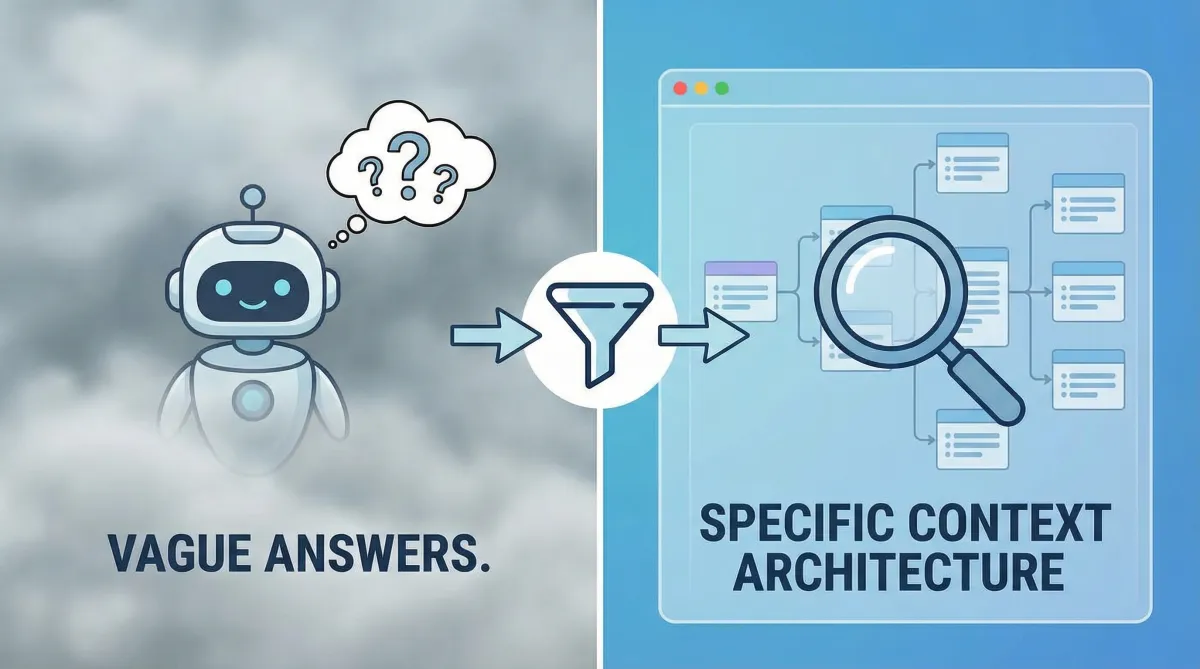
When you first start training an AI on your business data, you're in the formative stage. Every piece of information you feed it shapes how it thinks, how it reasons, and how it communicates. Feed it rubbish, and you're teaching it bad habits.
I had a client who ran a mortgage brokerage. Brilliant guy, but he made one critical mistake: he scraped every mortgage forum, every Reddit thread, every random blog post he could find about mortgages and fed it all into his AI assistant.
"More data is better, right?" he asked me.
I simply responded GIGO... Garbage In Garbage Out just like prompting you put an average half-assed prompt in and you are gonna get that rubbish straight back at you. Although in this case its slow and incessant so you may not realise it until its way down the track and the 'kid' is all grown up.
My broker mate, had his AI started giving advice that sounded like random internet strangers arguing in comment sections. Contradictory. Overconfident about things it didn't understand. Focused on edge cases and conspiracy theories about bank policies instead of sound financial guidance.
When we audited his system, we found the AI had learned to skip proper financial analysis and jump straight to conclusions, because that's what the forum posts did. Quick takes. Hot opinions. No working through the numbers.
We cleaned it up. We retrained it on quality data - actual mortgage documents, regulatory guides, case studies from successful applications. The AI improved, sure. But it never quite lost that tendency to occasionally skip steps in its reasoning. The bad habit was ingrained.
That's the problem with AI Brain Rot: you can mitigate it, but you can't fully cure it once it's set in.
Why Brain Rot Isn't Fully Recoverable
The Texas study proved something crucial: even when they took "rotten" AI models and trained them again on high-quality data - in some cases using nearly five times as much quality data as the junk data that caused the problem - they still couldn't restore the AI to its original performance level.
There remained a 17% gap in reasoning tasks, a 9% gap in long-context understanding, and a 17% gap in safety benchmarks.
Why?
Because AI systems don't just memorise information. They develop patterns of thinking. And once those patterns are established, they're incredibly difficult to completely overwrite.
Think about it like this: if you teach a child that shouting gets them what they want, and you reinforce that for a year, you can't just tell them one day "actually, we're going to use calm communication now" and expect instant results. They'll default back to shouting under stress because that's the pattern that's been reinforced hundreds of times.
AI systems do the same thing. If you train them on:
Short, punchy content (like social media posts), they learn to give brief, superficial answers
Attention-grabbing headlines and clickbait, they learn to prioritise engagement over accuracy
Poorly-reasoned arguments, they learn to skip logical steps
Contradictory information, they learn to be confidently wrong
And once these patterns are set, they persist. Even when you try to teach the system better habits later, it falls back on what it learned first when under pressure or dealing with edge cases.
The Real Cost of Getting It Wrong
I've seen this play out dozens of times now across different industries.
A property lettings agency client trained their AI on five years of tenant complaint emails. Every angry message, every dispute, every frustrated rant. They thought it would help the AI understand tenant concerns.
Instead, their AI started responding to normal enquiries with defensive, confrontational language. It had learned to expect conflict because that's what it was trained on.
When they brought me in, we had to essentially build a new system from scratch. The cost? Three months of lost productivity, £40,000 in consulting fees, and damaged relationships with tenants who'd received those awful AI responses.
Compare that to another client - an event management company - who did it right from the start. Before feeding any data into their AI system, we spent two weeks:
Cleaning their files
Removing duplicate content
Filtering out angry client emails and keeping only professional correspondence
Selecting their best project briefs and proposals, not every rough draft
Curating examples of their most successful events, with clear documentation of what made them work
The result? Their AI system worked beautifully from day one. Clear communication. Logical reasoning. High-quality suggestions for clients. No brain rot. No expensive fixes needed later.
The difference in approach cost them maybe an extra week upfront. But it saved them months of problems and thousands of pounds.
Quality Over Quantity: The Only Way Forward
Here's what most business owners get wrong about AI: they think more data is always better.
It's not.
The Texas researchers proved this conclusively. They tested different mixtures of quality data versus junk data. Even when just 20% of the training data was low-quality, they saw measurable cognitive decline in the AI systems. At 50% junk data, the decline was severe. At 100%, the systems were practically useless for complex reasoning tasks.
But here's what's interesting: a smaller amount of high-quality data consistently outperformed a larger amount of mixed-quality data.
Think of it this way: would you rather your child read ten excellent books or a hundred trashy magazines? Would you rather they spend time with three great mentors or a hundred random people on the internet?
The same principle applies to AI.
I own a property investment company that has 20 years of data. Every deal they'd ever done, every analysis they'd ever written, every email chain, every note scribbled in a margin.
We didn't use all of it.
We spent a week identifying their 50 best deals. The ones where they'd done thorough analysis, made sound decisions, documented their reasoning clearly, and achieved great outcomes.
We used those 50 deals to train their AI system, instead of all 500+ deals in their database (many of which were poorly documented, rushed decisions, or frankly, mistakes they'd learned from).
In fact, the 50 deals were chosen not because they made the most money, or had the flashiest sales pitch. Actually we chose based on the consistent sales pitch successful yes, repeatable absolutely, almost vanilla but usually with a bit of flair.
The result was an AI system that thought like my best property consultant on their best day. Not my average consultant on a rushed Tuesday afternoon.
That's the power of quality over quantity.
The Three Types of Junk Data Poisoning Your AI
Based on the research and my own client work, there are three main types of junk data that cause AI Brain Rot:
1. Short, Attention-Seeking Content
Social media posts, clickbait headlines, brief email snippets. This teaches your AI to communicate in short, punchy bursts without depth or nuance. It's the equivalent of training your AI on TikTok videos instead of documentaries.
2. Superficial, Low-Quality Information
Conspiracy theories, exaggerated claims, unsupported assertions, sensationalised content. This teaches your AI to be confidently wrong and to prioritise engagement over accuracy.
3. Contradictory or Poorly-Reasoned Information
Forum arguments, rough drafts, brainstorming sessions captured verbatim, unfiltered customer complaints. This teaches your AI to skip logical steps and jump to conclusions.
The tricky thing? Most businesses have all three types sitting in their databases right now.
Every company has social media archives, rough drafts, old emails, forum discussions they've saved, and plenty of content created for attention rather than accuracy.
If you dump all of that into your AI system without filtering it first, you're essentially giving your AI brain rot on purpose.
How to Prevent AI Brain Rot (Before It's Too Late)
The good news is that prevention is straightforward. It just requires discipline upfront.
Here's what works, based on implementing AI for dozens of businesses:
Start with your best, not your most.
Don't train your AI on every document you've ever created. Train it on your best documents. The ones that showcase clear thinking, proper analysis, and good outcomes.
Clean before you feed.
Remove duplicates, filter out angry emails, delete rough drafts, strip out social media posts, and eliminate anything created primarily for attention-grabbing rather than information-sharing.
Document your reasoning, not just your conclusions.
AI systems learn patterns. If you only show them conclusions without the reasoning that led there, they'll learn to jump to conclusions. Include your working, your analysis, your step-by-step thinking.
Prioritise depth over breadth.
Better to train your AI thoroughly on 50 excellent examples than superficially on 500 mediocre ones.
Test early and often.
Don't wait six months to discover your AI has developed bad habits. Test it weekly on real tasks and watch for warning signs: superficial responses, skipped reasoning, overconfident assertions without backing.
The Bottom Line
AI Brain Rot is real, it's common, and it's largely irreversible once it sets in.
But it's also completely preventable.
The difference between an AI system that helps your business grow and one that becomes an expensive liability comes down to one thing: the quality of data you feed it from day one.
You can't go back and un-teach bad habits once they're learned. You can't fully reverse brain rot after it's developed. You can't train an AI system on rubbish for months and then expect a quick fix to restore it to peak performance.
But you can get it right from the start.
You can be disciplined about data quality upfront. You can invest the time to clean, curate, and filter before you train. You can prioritise your best examples over your most numerous ones.
That property developer I mentioned at the start? We rebuilt his system properly, with curated quality data, it continues to transform his business. His AI now helps deal with objections, close deals, spots issues before they become problems, and communicates like his best senior consultant.
But it cost him six months and nearly £50,000 to get there, because he had to undo the damage first.
Don't make that mistake.
Get it right from the start. Because with AI, like with children, you only get one chance at those formative years.
Quality perpetuates quality. Rubbish perpetuates rubbish.
Which one are you training your AI on?
Live with passion & ai,
Brett
Want to make sure your AI implementation avoids brain rot from day one? Book a Coffee Conversation below and let's map out a quality-first approach that actually works. No pitch, no pressure - just a straightforward conversation about protecting your AI investment before it's too late.