The Inbox Trap: What Email Taught Us About Surviving AI
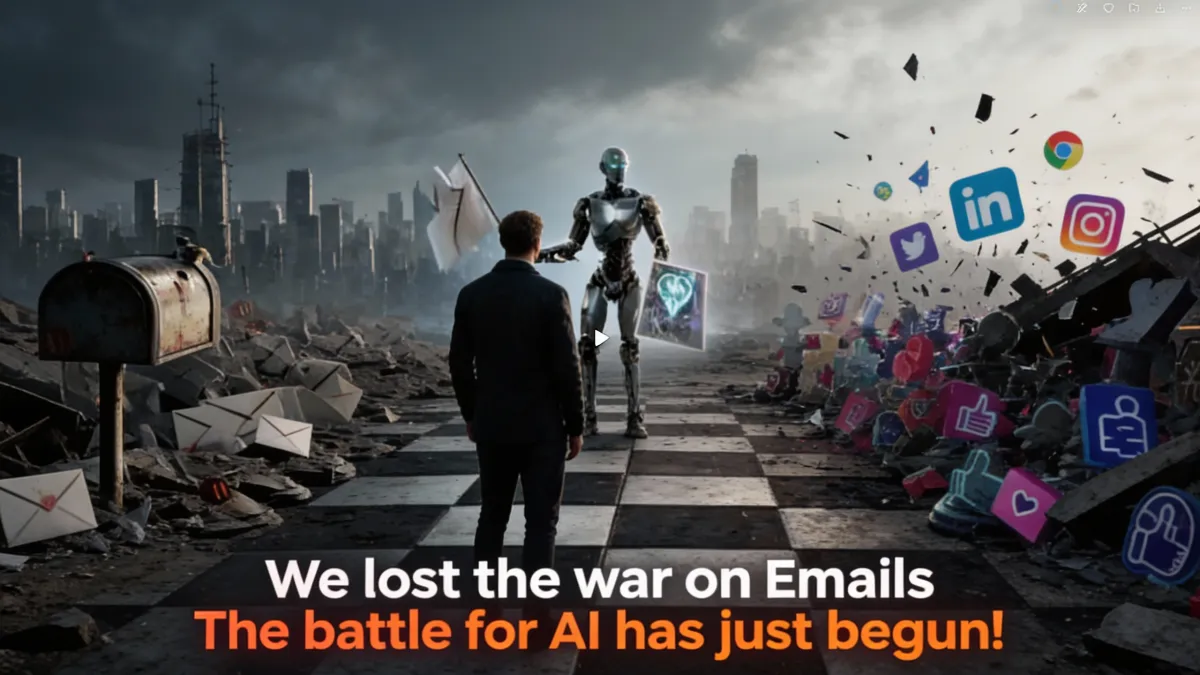
Some of us older folks may remember when email was going to set us free?
No more waiting for post. No more missed phone calls. Instant communication that would make us faster, more efficient, more connected. And it did—for about five minutes. Then came the avalanche. The 6am checks before coffee. The "just quickly" replies at dinner. The Sunday evening dread of an overflowing inbox.
We became slaves to the very tool that promised liberation.
Social media followed the same arc. A revolution in connection and marketing became an endless scroll of notifications demanding our attention. Another master, another leash.
Now here comes artificial intelligence, arriving with familiar promises: unprecedented productivity, transformed workflows, competitive advantage for those who act fast. The breathless headlines. The fear of being left behind. The pressure to adopt everything, immediately.
If you're feeling a strange sense of déjà vu, you should be.
The Pattern We Keep Missing
Every transformative technology follows the same trajectory. First comes genuine revolution—email really did change how business operates. Then comes overwhelm, as the technology's creators optimise for engagement, not your effectiveness. Finally, without intention, the tool starts using you.
AI is no different. Left unchecked, it will happily generate endless content, surface infinite possibilities, and create new tasks faster than you can complete them. The large language model companies are building products designed to capture your attention and dependence, not to serve your specific business needs.
This isn't pessimism. It's pattern recognition. And recognising the pattern is the first step to breaking it.
A Different Approach
The challenge I put to every client is simple: make AI work for you, not the other way around. Make it work for your team, on your terms, toward your goals.
This requires three things.
First, accept that AI isn't going away. Resistance is wasted energy. The leaders who dismissed email as a fad, who ignored social media until it was too late—they paid the price. AI will reshape your industry whether you participate or not. The only question is whether you'll shape how it affects your business.
Second, embrace it as a journey, not a destination. You don't need to transform everything by next quarter. Start small. Find one process that frustrates your team and experiment with AI as a solution. Learn from it. Then find another. This is a gradual integration, not a revolution. The businesses that try to change everything at once usually end up changing nothing—except their stress levels.
Third, and most importantly, become a leader of AI within your business. This is where most organisations fail. They let the technology vendors set the agenda. They adopt features because they exist, not because they solve actual problems. They consume AI content that tells them what's possible rather than defining what's necessary.
Leadership means something different here. It means understanding how these tools actually work—not the technical details, but the capabilities and limitations. It means encouraging your team to bring problems to AI, not waiting for AI to create new problems for your team. It means asking "what does our business actually need?" before asking "what can this technology do?"
If you let the platform owners dictate direction without your leadership, you will become dependent on their priorities, their timelines, their vision for how you should work. That's not a partnership. That's servitude.
Cut Through the Noise
Here's the liberating truth: most of what's being said about AI doesn't matter to your business. The breathless updates about new features. The speculation about what's coming next. The pressure to have a presence on every new platform.
Noise.
What matters is identifying the specific problems AI can solve for you, implementing solutions that serve your actual workflows, and ignoring everything else. This selective focus isn't ignorance—it's strategy.
And this is not new to you. You've been doing exactly this your entire career. Every leader learns to filter the essential from the urgent, to resist the pressure to chase every trend, to focus resources on what actually moves the business forward.
AI is simply the latest tool requiring that same discipline.
The Real Opportunity
The businesses that thrive with AI won't be the ones that adopt it fastest or most comprehensively. They'll be the ones that adopt it most intentionally—who treat it as a tool to be directed rather than a force to be survived.
You've already survived email. You've navigated social media. You've weathered every technological shift that was going to change everything.
This one is no different. Lead it like you've led everything else.
The only question is whether you'll learn from the inbox trap, or walk into it again.
Live with passion and AI,
Brett