Your Book Is Your Competitive Advantage: Why Leaders Must Document Their Unique Story
Writing a book isn't for everyone, but in today's world of personal branding and AI generated content, leaders need to capture what makes them different. Your book should document your unique distinctions: how you built your business, your uncommon approaches, and the stories that showcase your personality. Focus on the why, when, where, and who, not necessarily the how.
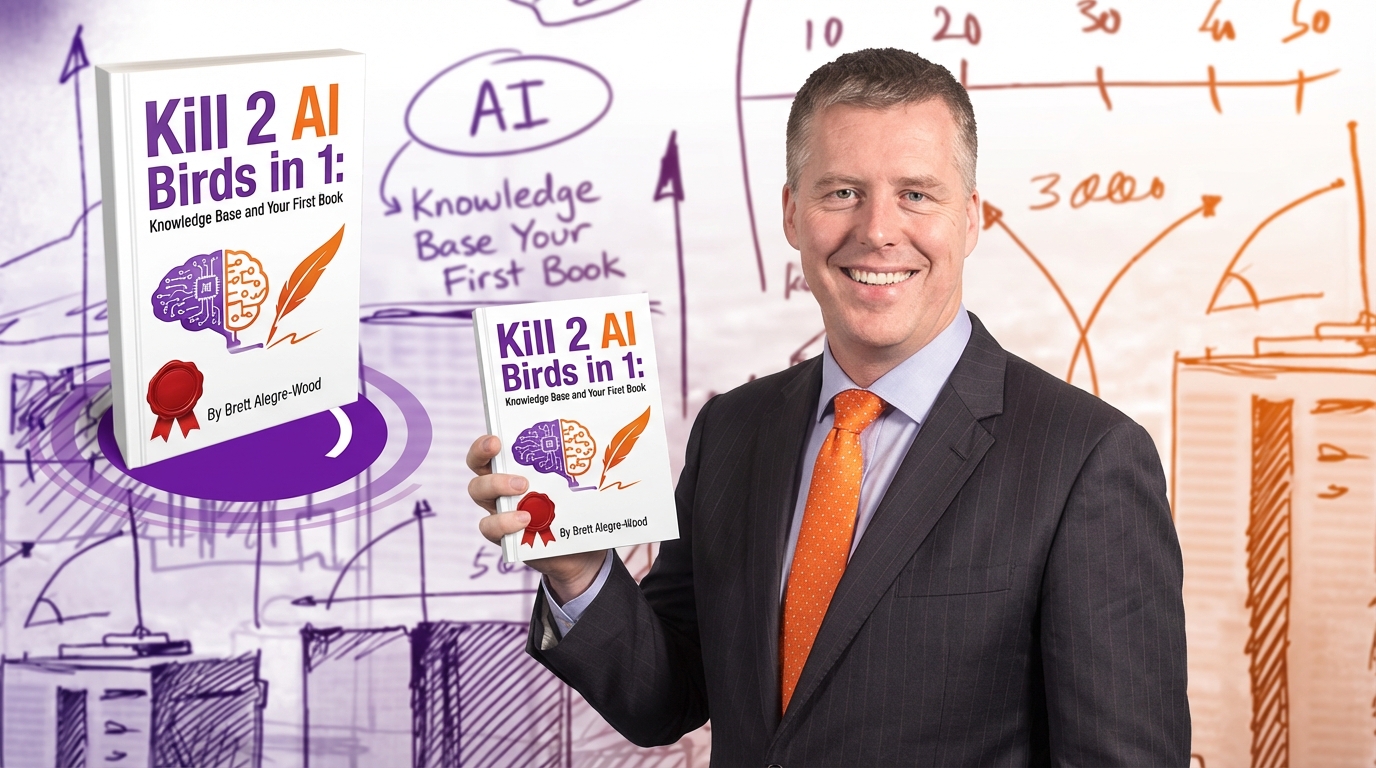
The guided process takes 12 hours spread over 8 weeks, and simultaneously builds your business knowledge base. You're killing two massive birds with one stone. The result is 50,000 to 300,000 words of content that becomes your marketing engine for 3 to 6 months while preserving your expertise for your team to use forever.
The Personal Branding Crisis No One Is Talking About
We're entering a world where generic content is everywhere. AI can write anything, copy anyone's style, and produce endless variations on the same theme. In this landscape, what makes you different isn't just what you know. It's how you arrived at that knowledge, the battles you fought, the mistakes you made, and the unique lens through which you see your industry.
Your book is no longer a vanity project. It's your defensive moat in a sea of sameness.

I learned this the hard way. My first book, The 3+1 Plan, won the People's Book Prize. It took hundreds of hours of writing and editing. The final copy shrank from a 350 page compendium to a much smaller, more focused book. But that process sparked five more books that I wrote over the following years. Each one captured a different facet of my thinking, my approach, my story.
Here's what I discovered: the book you write today isn't just about selling copies. It's about staking your claim to your unique perspective before the AI flood makes everything feel the same.
Why Leaders Must Write (Even If They Hate Writing)
Let me be clear: writing a book isn't for everyone. If you're not ready to examine what makes your approach different, if you haven't yet developed your own methodology, or if you're still borrowing entirely from others, then don't write a book yet.
But if you've been in business for any length of time, if you've built something from nothing, if you've developed approaches that work for you even when conventional wisdom said otherwise, then you have a book in you. Probably many books.
The question is: will you capture it before generic AI content buries it?
The Differentiation Imperative
Personal branding used to be optional. Nice to have. Something for thought leaders and consultants. Not anymore. Today, your potential clients are drowning in information. They can get "how to implement AI" from a thousand sources. They can watch YouTube tutorials, read blog posts, follow frameworks.
What they can't get anywhere else is your story. Your unique distinctions. The specific way you connect dots that others miss. The personality behind the process.
When I wrote They Laughed When I AI'ed 126 Tasks in My Business on a plane from Singapore to Brisbane, from concept all the way to editing version, I wasn't trying to create the definitive AI implementation guide. I was capturing my journey, my framework, my voice. That's what makes it different from every other AI book flooding the market.
Your book does the same thing. It says: "This is how I see the world. This is why I do what I do. If this resonates with you, we should work together."
Stories First, Framework Second
Here's my approach, and you'll need to find your own variation: I write the book first, then go back and add stories. Stories that relate to each chapter and topic. Stories that reveal my personality. Stories that show the why, when, where, and who, but not necessarily the how.
The how? That's what I save for YouTube, for workshops, for paid consulting. Or sometimes I give it away freely because information is now essentially zero cost, and giving it away endears you to people. The ones who take your how and don't use your services? They were never going to be your customers anyway. The ones who read it and think, "These people know what they're talking about"? Those are the clients you want.
This was a hard decision for me at first. With my first published book back in 2008, I convinced my publisher to let me give away the first chapter. Then three chapters. Then the entire book. Sales increased with each phase. I was sold. Since then, I see books as cheap marketing brochures.
Think about it: I used to happily pay £15 for a color brochure that would be thrown in a pile after a meeting. I could print a book for £3. So I started giving away free books. It worked. Then I took it to the next level and signed the books. Now they sit on shelves in people's homes, not in recycling bins. Finally, I personalized the inscription and signature.
You'll need to find your own comfort level with this. But remember: in a world where information is free, attention and trust are the real currency.
Design for Longevity, Iterate for Relevance
One of the biggest mistakes authors make is dating their content. They reference "last year" or "2025" or mention specific prices or staff names. This timestamps the book and makes it feel stale within months.
Write in a timeless manner instead. Avoid dates. Leave out prices. Skip staff names unless they're integral to the story. Your book can then live for years, even decades.
But here's the beauty of modern publishing: you don't have to get it perfect the first time. Today, you can design, publish, and print on demand for just a few extra dollars. This allows you to iterate versions over and over. Add new stories. Update trends and advice. Your book becomes a living document that evolves with your thinking.
The difference between a static book and an evolving one is the difference between a historical artifact and a current conversation with your market.
The Hidden Benefit: A Content Engine for Your Business
Here's what most people miss about writing a book: the process forces you to commit to getting a massive body of work together. We're talking 50,000 to 300,000 words when you include all the research and generated content.
Your final book won't be 300,000 words. But all that material? That becomes your content engine.
Your marketing team can break it into social media posts for months, video scripts, shorter articles, email sequences, LinkedIn content, case studies, and white papers.
One book writing process can give your team 3 to 6 months of content in one hit. They'll thank you for it.
But there's an even bigger benefit most people completely overlook.
The Two Birds, One Stone Strategy: Book Plus Knowledge Base
This is the best part of the entire process, and it's where AI implementation companies like mine have a massive advantage in helping you.
At the same time as writing your book, you can build your AI knowledge base.
Think about it: both require you to extract your expertise, document your processes, capture your stories, and organize your thinking. Both require you to answer the same fundamental questions. What makes our approach different? How do we handle common situations? What's our tone and personality? What are our core principles? How do we want our team to represent us?
By combining these two projects, you're essentially downloading your brain in a format that serves two critical purposes.
First, your book positions you in the market and attracts the right clients. Second, your knowledge base empowers your team to work with your expertise embedded in every AI interaction.
This is transformational. Your team can use this knowledge base with AI tools to respond to clients in your voice, make decisions using your framework, and handle situations the way you would, even when you're not available.
For more on how to build an effective knowledge base that your AI systems can actually use, see our detailed guide at www.anaboo.ai/knowledge-base.
How the Book Feeds Your Knowledge Base
When you write your book with the knowledge base in mind, every chapter becomes a repository of reusable assets.
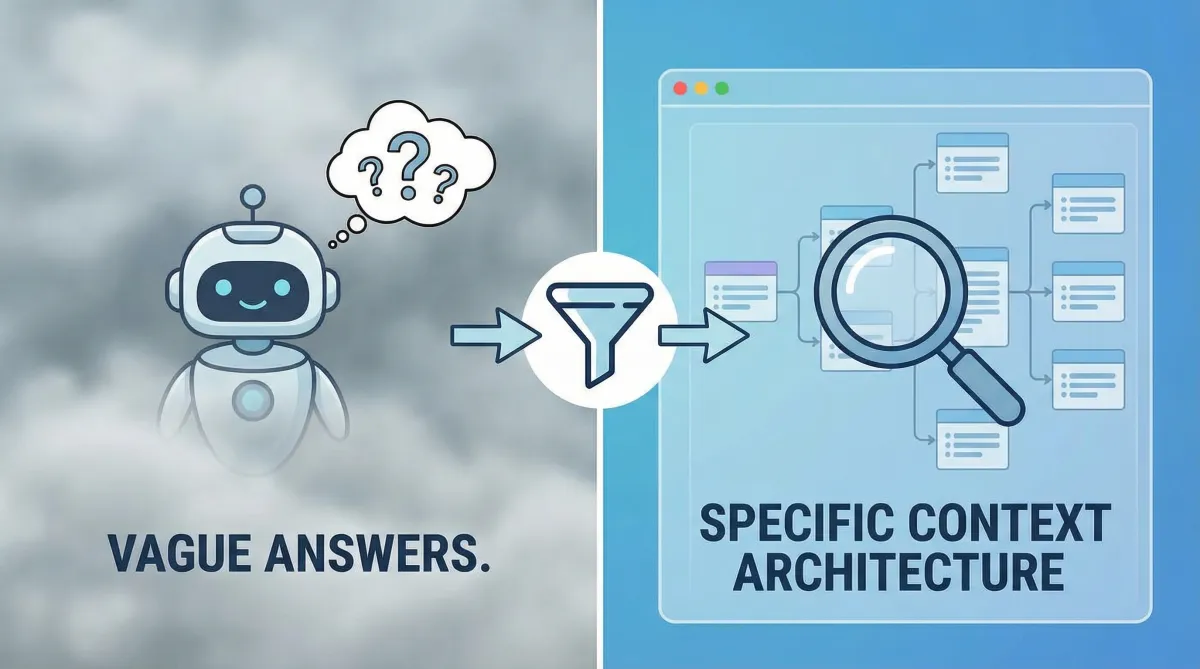
Your stories show AI how you communicate. Your methodologies become prompts for AI reasoning. Your book answers become customer service responses. Your examples become templates for similar situations. Your philosophy guides AI judgment calls.
Instead of doing these as separate projects (book takes 100 hours, knowledge base takes 80 hours), you do them together in about 60 hours total. The overlap is massive, and the reinforcement between them makes both stronger.
The Process: 12 Hours to a Finished Book
Here's how we do it at Anaboo, and how you can do it yourself or with our help.
Phase 1 involves brain dump sessions. Four weeks, one hour each. Week one covers your story, your journey, what makes you different. Week two explores your methodology, your frameworks, your unique approaches. Week three captures your stories, your case studies, your proof points. Week four documents your vision, your warnings, your advice.
Phase 2 involves editing sessions. Four weeks, two hours each. Weeks five and six focus on structure, flow, and coherence. Weeks seven and eight handle polish, personality, and final touches.
Total time investment: 12 hours spread over 8 weeks.
Yes, you read that right. We can actually do this process in an afternoon if you think your brain can handle the forced extraction of years of stories in one sitting. But most people prefer the weekly rhythm. It's less intense and produces better results because your subconscious keeps working between sessions.
The cost for this process is around $8,000 and includes guided interview sessions to extract your stories and expertise, AI assisted writing and content generation, prompting concepts and frameworks tailored to your voice, story development and structure, editing and refinement, knowledge base creation in parallel, and marketing funnel development to make this work in your business.
At the end, you have a finished version ready for your customers and a knowledge base ready for your team.
The How Question: To Share or Not to Share?
One of the biggest decisions you'll face is how much of your "how" to reveal. Some consultants guard their methods jealously. Others give everything away.
I've tried both approaches. Here's what I've learned.
Giving away the how has several benefits. It demonstrates competence and builds trust. It attracts people who appreciate expertise. It filters out DIY types who were never going to hire you anyway. It endears you to your audience.
But there are valid reasons to hold back. Your how might be your primary revenue stream through courses, workshops, or consulting. You might want to give the what and why in the book, saving the how for other mediums like YouTube. You might offer the how as a premium product.
There's no wrong answer here. It depends on your business model and comfort level. Information is essentially at zero cost now, so hoarding it rarely makes sense. But you can strategically reveal different layers through different channels.
I tend to give away most of the how in my books because I've found that people who implement it themselves weren't going to hire me anyway. People who try and fail become better clients because they understand the complexity. People who succeed become advocates and refer others.
But your mileage may vary. The key is to make an intentional choice, not default to either extreme.
Your Book Is Waiting
If you've been in business for any length of time, you have at least one book in you. Probably several. The question isn't whether you have enough to say. It's whether you're willing to extract it and package it in a way that serves your market and your business.
In a world of AI generated sameness, your unique story is your competitive advantage. Your book is how you claim it, preserve it, and scale it.
The process is faster and easier than you think. The benefits extend far beyond selling copies. And when you combine it with building your knowledge base, you're not just writing a book. You're building the infrastructure for your team to operate with your expertise embedded in everything they do.
Let's Talk About Your Book
You've seen the concept. You understand the value. If you're like most business owners, you can already imagine what your book might look like and how it could serve your business.
The question is where to start.
Let's talk it through. No pitch, no pressure. A simple Coffee Conversation to explore whether this makes sense for you right now, what your unique angle might be, and how the book plus knowledge base approach could work in your specific situation.
My team at Anaboo and I would be honored to help you capture your expertise and amplify your voice. One conversation, one story, one chapter at a time.
Book your Coffee Conversation today at www.anaboo.ai and let's turn your expertise into your competitive advantage.
Live with passion & AI,
Brett
========================================================
DIY Guide: Write Your Book with AI
========================================================
For those who want to tackle this yourself, here's the detailed process adapted from the excellent Substack article by ExcellentPrompts. I've included their prompts with some commentary on how to adapt them to focus on stories and your unique perspective.
Before You Begin: The Foundation
Remember, your book should focus on stories that reveal your journey and personality. The why, when, where, and who (not necessarily the how). Timeless principles (avoid dating your content). Your unique distinctions (not generic advice).
As you work through these prompts, think about how each piece of content can also feed your knowledge base. Every framework you develop, every story you tell, every principle you articulate. These all become assets your team can use with AI tools.
Step 1: Define Your Book's Purpose and Audience
Start by getting clear on why you're writing this book and who it's for. Use this prompt:
"I want to write a book about [your topic]. My target audience is [describe your ideal reader]. The main transformation I want to create for them is [desired outcome].
Please help me:
Refine my book's core purpose
Identify the key pain points my readers face
Define what makes my perspective unique in this space
Suggest 3 to 5 possible book titles that capture this unique angle"
Key adaptation: Focus on what makes YOUR perspective unique. Don't just write another generic book on your topic. What's your uncommon approach? What do you believe that others in your industry don't?
Step 2: Create Your Book Outline
Once you have clarity on purpose and audience, create your structure:
"Based on my book's purpose [state purpose] and target audience [state audience], help me create a detailed outline for a book that:
Takes readers on a logical journey from where they are to where they want to be
Includes 8 to 15 chapters
Allows space for personal stories and case studies in each chapter
Builds toward a clear call to action
For each chapter, provide: A compelling chapter title 3 to 5 key points to cover Suggested story or example opportunities How this chapter connects to the next"
Key adaptation: Make sure your outline leaves explicit space for stories. These aren't afterthoughts. They're the heart of what makes your book different.
Step 3: Develop Your Chapter Content
Now tackle each chapter individually. For each one, use this prompt:
"I'm writing Chapter [X]: [Chapter Title] for my book on [topic].
The key points I want to cover are: [List your 3 to 5 key points]
Please help me:
Create an engaging opening for this chapter
Develop each key point with clear explanations
Identify where I should add a personal story or case study
Suggest transitions between sections
Draft a chapter conclusion that bridges to the next chapter
Write in a [conversational/professional/authoritative, choose your style] tone that sounds like a real person sharing hard won insights, not a textbook."
Important: After AI generates this content, YOU must go back and add the actual stories. The AI can identify where stories should go, but your real stories, the ones only you can tell, are what make this book yours.
Step 4: Extract and Place Your Stories
This is where you separate yourself from generic AI content. Use this prompt for each chapter:
"I need to add a personal story to Chapter [X] that illustrates [specific concept or principle].
The story should: Reveal something about my personality or approach Show why, when, or where this principle matters (not necessarily how to do it) Be authentic and specific (real names, real situations unless privacy matters) Connect emotionally with readers
Ask me these questions to help extract the right story:
When did I first learn this lesson?
What mistake or challenge led to this insight?
Who was involved and what did they say or do?
What was at stake?
How did this change my approach?"
Key adaptation: Don't let AI write your stories. Let it help you structure and polish them, but the raw material must come from your actual experience. This is where you capture your voice and personality.
Step 5: Refine for Timelessness
Once you have your draft, remove anything that dates the content:
"Review the following chapter and help me remove or replace specific years or date references (replace with recently or a few years ago), specific prices (replace with relative terms like significant investment or remove entirely), staff names unless they're integral to the story, references to this year or last year, and technology names that might become obsolete (focus on principles instead).
[Paste your chapter]
Suggest replacements that keep the content timeless while maintaining clarity and impact."
Step 6: Create Your Knowledge Base Assets Simultaneously
Here's where you kill two birds with one stone. After each chapter, extract knowledge base assets:
"Based on Chapter [X] of my book, help me create knowledge base assets that my team can use with AI tools:
Extract 3 to 5 core principles that should guide AI interactions
Identify tone and voice examples that show how I communicate
Create FAQ entries based on common questions this chapter answers
Develop decision frameworks from the methodologies I describe
List any templates or structures that could be reused
Format these as clear, reusable components that can be referenced in prompts."
These assets go into your knowledge base (see www.anaboo.ai/knowledge-base for implementation details) and allow your team to work with your expertise embedded in their AI tools.
Step 7: Generate Introduction and Conclusion
Your intro and conclusion are critical. They bookend your unique perspective:
"Based on my complete book outline and key themes, help me write:
An introduction that shares why I'm uniquely qualified to write this book, tells a compelling story that illustrates the book's main theme, promises a specific transformation for readers, and sets expectations for how the book works.
A conclusion that reinforces the main message, calls readers to action, leaves them inspired and equipped, and provides next steps for working with me or my company."
Step 8: Create Supporting Content
Your book generates a massive content library. Extract it:
"Based on Chapter [X], help me create three social media posts (LinkedIn, Twitter/X, Facebook) that tease key insights, a 500 word blog article that explores one concept in depth, five tweet sized insights that stand alone, a video script outline (2 to 3 minutes) discussing the chapter's main story, and an email to my list introducing this chapter's key lesson.
Maintain my voice and personality in each format."
Do this for each chapter and you'll have 3 to 6 months of marketing content ready to deploy.
Step 9: Polish and Personalise
AI can draft, but you need to make it yours:
"Review the following section and help me make it more personal and distinctive by replacing generic language with specific, concrete terms, adding personality markers (how I actually speak), removing clichés and overused phrases, strengthening the unique angle, and making the voice more consistent with my other writing.
[Paste your section]
Show me before and after examples of the changes."
Step 10: Create Your Book Description and Marketing Copy
Once your book is complete, you need to sell it:
"Based on my complete book about [topic] for [audience], create a back cover description (150 to 200 words) that compels readers to buy, a longer book description for Amazon and online retailers (300 words), three different taglines I could use in marketing, five bullet points highlighting key benefits readers will gain, and a one sentence elevator pitch.
Emphasise what makes this book different from others on the same topic, specifically my unique stories and perspective."
Advanced Tip: Iterative Refinement
Don't expect perfection in one pass. Use this iterative prompt:
"I'm on revision [X] of my book. The feedback I've received is: [List specific feedback]
The areas I feel need strengthening are: [List your concerns]
Please help me address the feedback systematically, strengthen weak areas without losing my voice, tighten sections that drag, enhance sections that resonate, and maintain consistency throughout.
Focus on making this sound more like me, less like AI generated content."
The Knowledge Base Integration Loop
After completing your book, do one final pass to ensure maximum knowledge base value:
"Review my complete book and identify all recurring themes that should be codified as principles, all decision frameworks that should become templates, all FAQs that should be standard responses, all tone and voice examples that define how we communicate, and all case studies that could guide similar situations.
Create a structured knowledge base document from these elements that my team can use to train AI tools on how I think, respond to clients in my voice, make decisions using my frameworks, and handle common situations my way."
This final step ensures that the 60 plus hours you invested in your book yields both external and internal value. You're positioning yourself in the market while empowering your team.
Important Reminders for DIY Authors
AI is your assistant, not your author. Use AI to structure, organize, and polish, but the stories, insights, and personality must come from you.
Stories trump everything. Generic advice is everywhere. Your specific stories are nowhere else. Prioritise them.
Iterate ruthlessly. Your first draft is just raw material. Plan for 3 to 5 revision passes.
Read it aloud. If it doesn't sound like something you'd actually say, rewrite it.
Get feedback from your actual audience. Test chapters with clients or colleagues who represent your target reader.
Don't date your content. Write for longevity, then iterate versions as your thinking evolves.
Think modular. Every chapter should be able to stand alone as an article, video, or social post.
Feed your knowledge base simultaneously. Don't treat this as a separate project. Extract KB assets as you write.
The Timeline Reality
If you're doing this yourself, you have options. Fast track takes 2 to 4 weeks of intensive work (40 to 60 hours total). Sustainable pace needs 8 to 12 weeks at 5 to 8 hours per week. Comfortable pace requires 3 to 6 months at 2 to 3 hours per week.
The key is consistency. Block the time, protect it, and chip away systematically.
When to Get Help
You should consider working with us at Anaboo if you want this done in 12 hours over 8 weeks instead of 60 plus hours over months, you struggle to extract your own stories (we're good at asking the right questions), you want the knowledge base built professionally in parallel, you need the marketing funnels set up to actually use all this content, or you value your time at more than $83 per hour (the cost difference).
The DIY path works. Many people successfully write their books this way. But the guided path is faster, produces better results, and kills two birds (book plus knowledge base) with one stone more effectively.
Your Next Step
Whether you go DIY or guided, the important thing is to start. Your book is waiting. Your expertise deserves to be captured. Your market needs your unique perspective.
Begin with Step 1 above, or book a Coffee Conversation below and let's map this out together.
The generic AI content flood is coming. Your stories are your moat. Build it now.