
The Power of Iteration in AI: Why Your First Output Is Only the Beginning
Most people think AI works like a magic vending machine. You type in a request, press enter, and out pops a perfect answer — polished, insightful, and ready to go. The truth is very different. AI doesn’t solve your problem on the first go; it starts the process of solving it.
Iteration is where the magic happens.
Iteration Definition: "repetition of a mathematical or computational procedure applied to the result of a previous application, typically as a means of obtaining successively closer approximations to the solution of a problem."
Whether you’re prompting ChatGPT, Gemini, Claude, or coding in a visual builder like Vibe Coding, the principle is the same: your first output is rarely your best output. The quality of what comes out depends entirely on the quality — and evolution — of what goes in.
In the fast world of social media and short attention spans, people expect instant brilliance. But those who truly succeed with AI are the ones who slow down, refine, test, and iterate.
Let’s dig into why iteration matters and how you can master it.
The Myth of “Perfect First Prompts”
Every day I see business owners, marketers, and creators give up too soon. They type a single sentence into their AI tool, get a bland or inaccurate answer, and conclude that “AI isn’t that good.” or worse which is that it gives them an answer that has no soul and doesn't really build your brand voice, instil customer certainty or provide you with a insightful response that build confidence in your abilities.
But the problem isn’t the AI — it’s the expectation.
Prompting isn’t typing. It’s designing a conversation. A great AI output comes from a process of refinement, not luck.
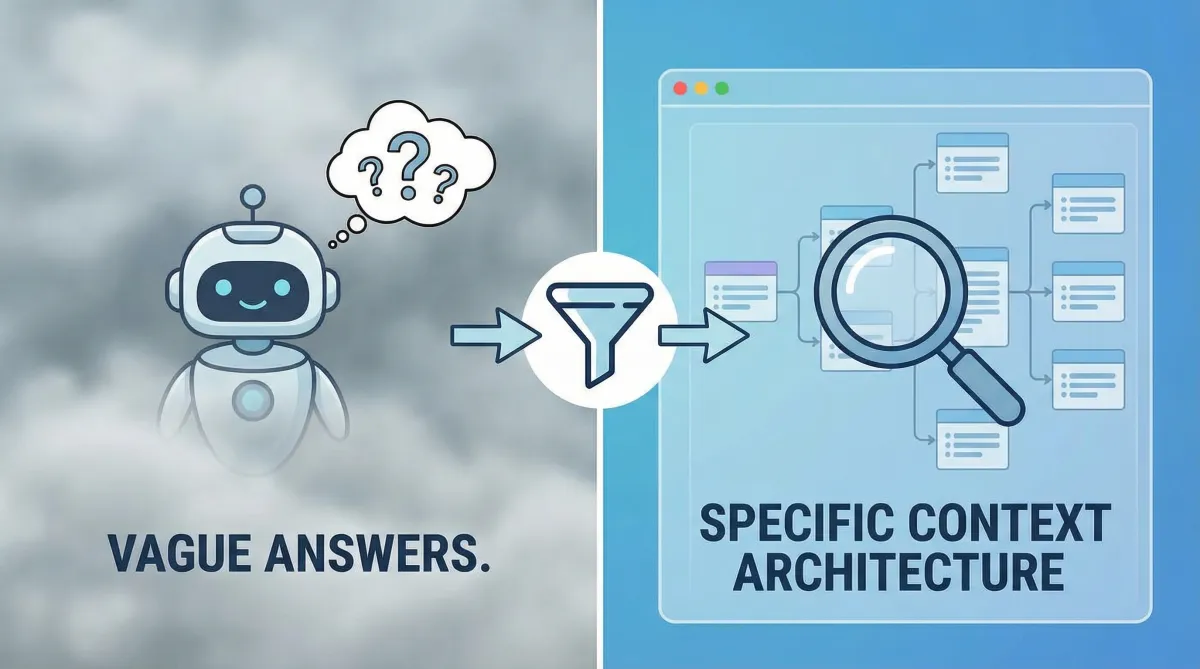
Think of AI like a brilliant intern — fast, capable, but inexperienced. If you ask vaguely, you’ll get vague results. If you ask precisely, explain clearly, and give examples, you’ll get something remarkable.
The difference between “meh” and “magic” is iteration.
GIGO: Garbage In, Garbage Out
It’s an old computer term, but it’s never been truer: Garbage In, Garbage Out.
If your prompt is unclear, rushed, or missing context, the AI will do its best — but it’ll base its best guess on incomplete information. That’s like asking a chef to cook dinner without telling them who it’s for, what ingredients they have, or how many people are coming.
Iteration fixes that.
Each round of prompting gives you a chance to course-correct. You can refine tone, clarify purpose, and tighten the focus. The more you iterate, the more the AI understands your intent.
The Art (and Science) of Iteration
For some people, prompting is a science. For others, it’s an art.
For most? It’s crayons.
That’s not an insult — it’s reality. Most users are still drawing basic stick figures while they could be painting masterpieces.
Iteration is how you learn to paint.
Here’s what that looks like in practice:
Start with a broad idea.
Write a simple prompt describing what you want. Don’t overthink it.Evaluate the result.
Is it close? Is it useful? What’s missing?Refine the prompt.
Add more context. Tell it who the audience is, what tone you want, or how it should structure the answer.Add guardrails.
Tell it what not to do. AI responds best when you narrow its playground.Use the result as feedback.
Each output teaches you something about how the model interprets your words. Adjust accordingly.Ask the AI how to improve your own prompt.
One of my favourite tricks is to take my own prompt and feed it back to the model. I ask:“How can I improve this prompt to get a better, more detailed result?”
The suggestions I get are often better than I could have written myself.
That’s iteration in motion — a conversation, not a command.
Using Multiple Models to Deepen the Process
Each AI model has its own personality, strengths, and blind spots. I often combine several to get the best results.
For instance:
I might start with Grok to “deep think” a problem — it’s analytical, wide-ranging, and provocative.
Then I’ll pass the refined brief to Claude to write it in a natural, human, story-driven way.
After that, I’ll ask Gemini to check what’s missing or unclear.
Sometimes I’ll even feed the final version into DeepSeek or Manus to polish tone or technical accuracy.
The result? A multi-dimensional response built from the collective intelligence of different models, each playing to its strengths.
This approach takes longer, yes. But it’s how you move from “that’ll do” to “that’s outstanding.”
Iteration in Vibe Coding and AI Development
Iteration isn’t just for prompts. It’s the backbone of vibe coding, AI design, and automation building.
When developing workflows or coding logic for AI tools, you start with a concept — a flow, a trigger, a dataset — and then you test, tweak, and refine until it behaves the way you imagined.
Each iteration teaches you something about your data, your assumptions, and your process. You get closer to the ideal outcome through trial, error, and small, deliberate improvements.
That’s how AI is built. And it’s also how it should be used.
Iteration Is Intelligence
Humans love finality. We like to believe there’s a “best” answer out there, waiting to be uncovered. But intelligence — human or artificial — isn’t about finding one answer. It’s about refining understanding.
Iteration is intelligence in action.
It’s how science works. It’s how art evolves. It’s how AI learns.
Every time you refine your prompt, you’re teaching the model how to think more like you. You’re aligning its logic with your intent. And in doing so, you’re sharpening your own clarity too.
Because here’s the secret: iteration doesn’t just make AI smarter — it makes you smarter.
Frameworks and Thinking Models
One of the most powerful things you can do is anchor your iteration to an existing framework.
For example:
When writing a sales pitch, I might tell the AI to structure it using SPIN Selling — Situation, Problem, Implication, Need-Payoff.
When planning a project, I might ask it to apply the MoSCoW Method — Must, Should, Could, Won’t.
When brainstorming creative ideas, I might say, “Think like Leonardo da Vinci.”
That last one might sound eccentric, but it works. We have centuries of recorded thinking styles — we can simulate how Einstein, Drucker, or Jobs approached problems. Why not use that?
Iteration allows you to combine ancient wisdom with modern power. Each loop sharpens the context, tightens the thinking, and brings you closer to brilliance.
Why People Resist Iteration
Iteration sounds simple. So why do most people skip it?
Because we live in a “three-second world.” We’ve been conditioned by social media to expect instant results. If something takes more than one try, it must be broken.
That mindset kills innovation.
The best results — in art, business, or AI — always come from patient refinement. The first attempt is the foundation, not the finish.
Once you accept that, you’ll stop judging your AI on its first output and start collaborating with it like a partner.
That’s when things get interesting.
A Real-World Example
Recently, I was helping a business owner craft a customer service workflow. Their first prompt to the AI was:
“Write a script for handling customer complaints.”
The AI produced something generic and unhelpful. They were disappointed.
So, we iterated.
We added:
The tone of voice: friendly but confident.
The context: customers were landlords frustrated with delayed maintenance.
The desired outcome: empathy first, solution second, reassurance third.
The new script was far better — but still robotic.
We iterated again:
“Rewrite this as if you were a senior property manager with ten years’ experience who genuinely wants to calm the customer.”
Now it was human. Empathetic. Real.
Finally, we asked:
“Summarise this in three bullet points for training junior staff.”
By the fifth iteration, we had a professional-quality workflow document — something that would’ve taken hours manually.
Iteration turned a generic draft into a polished system.
The Compound Effect of Iteration
Every iteration is a small improvement, but together, they compound.
The first prompt gets you 50% there. The next one adds 20%. Another refines 10%. By the time you’re done, you’ve created something 10 times more valuable than what you started with.
Iteration is like sculpting — each pass chips away the unnecessary and reveals the form beneath.
Over time, your prompts get sharper, your AI gets smarter, and your results become consistently excellent.
How to Build an Iterative Habit
If you take one thing away from this article, make it this: never settle for the first answer.
Here’s how to make iteration second nature:
Expect the first draft to be rough. Treat it as a starting point, not a failure.
Ask what’s missing. Literally — ask the AI: “What could improve this?”
Refine your prompt each time. Be specific. Add detail. Remove fluff.
Use different models if needed. Each sees the world slightly differently.
Review your workflow regularly. Iteration doesn’t stop once it works — it continues as your needs evolve.
The Anaboo Philosophy: Iterate Everything
At Anaboo, iteration isn’t just a technique. It’s a philosophy.
When we build AI systems for businesses, we never assume the first setup will be perfect. We test, adjust, and refine. Then we do it again. Because every iteration teaches us — and the system — something new.
Iteration keeps you humble. It keeps you learning. And it’s the antidote to complacency in a world that changes faster than ever.
A Final Thought
AI isn’t magic — it’s mirrors. It reflects back the quality of your thinking, your clarity, and your patience.
The more you iterate, the clearer that reflection becomes.
So next time you type a prompt and feel underwhelmed by the result, don’t walk away. Refine it. Add context. Layer insight. Challenge it. Ask for better.
Because the truth is, the first answer isn’t wrong — it’s just incomplete.
Iteration is how you finish the thought.
If you’d like to explore how iteration could transform how your business uses AI — from daily prompts to company-wide automation — let’s have a coffee conversation.
Live with passion & Ai,
Brett